
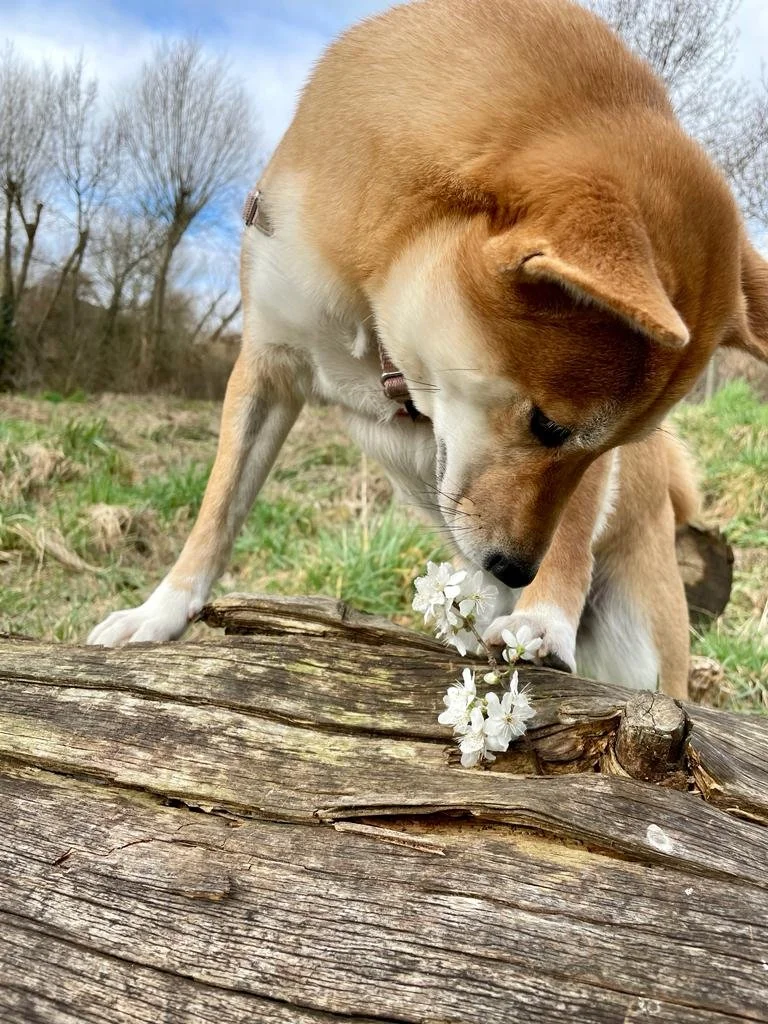
Living with Makenzie means working things out together.
She’s a very particular Shiba, with a complicated body and a strong sense of self. I came to her with almost no experience of living with a dog. Learning to live well with her meant learning a great deal about canine behaviour along the way.
Most of the time we figured things out slowly. Sometimes stubbornly. Often by trying again.
These pieces stay close to that quiet work between us — the negotiations, the setbacks, and the small decisions that slowly change something in a relationship.

On her own Terms
She had known from the beginning. I was still learning to believe her. Nine harnesses in total — each refusal immediate and without ambiguity. The question was never what she wanted. The question was whether I was ready to hear it.
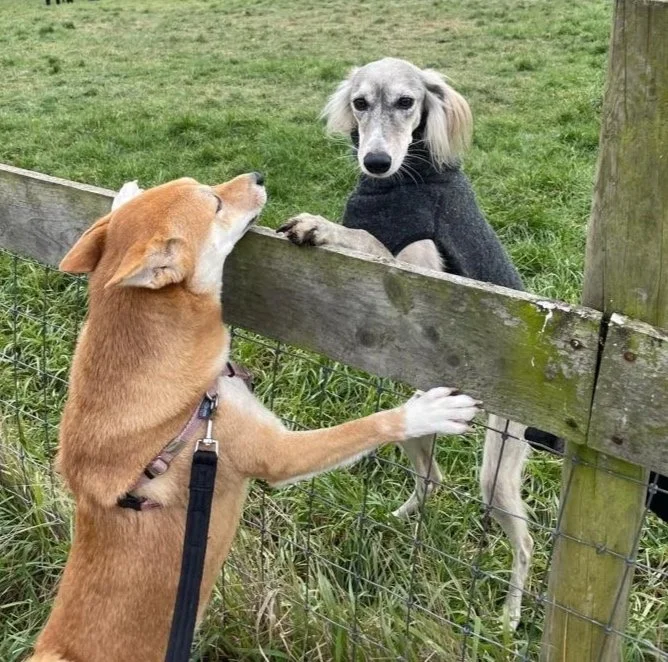
Inside the Gate
From twenty-eight floors up, the dog park looked manageable. We stood at the window and watched before going down — trying to read the mood of it from a safe height. How many dogs, which ones, whether the energy looked like something I could enter.
Makenzie never needed to do this. She ran through every gate as if the world on the other side had already decided to welcome her. Learning to follow her in took longer than I expected, and taught me more than I was prepared for.

Before I learned to arrive
Before I learned to arrive, I was trying to get everything right. This piece follows the early tension between expectation and reality—and the moment where something shifts, not through control, but through presence.

Our first night together
She was with us from the first night, but never in a way that let either of us rest. This is a story about those early days — the uncertainty, the intensity, and the quiet shift that begins when living together slowly starts to make sense.

Dogs were part of my childhood
Dogs were part of my childhood, but never in a way that felt familiar or safe. For years they felt unpredictable, something to manage rather than choose. When Makenzie entered my life, I thought preparation and structure would be enough. What I didn’t realise yet was that routines and plans are logistics — not the relationship.